
FOOD AND DRINKS
Picada Food: From Sharing Boards to Rich Sauces

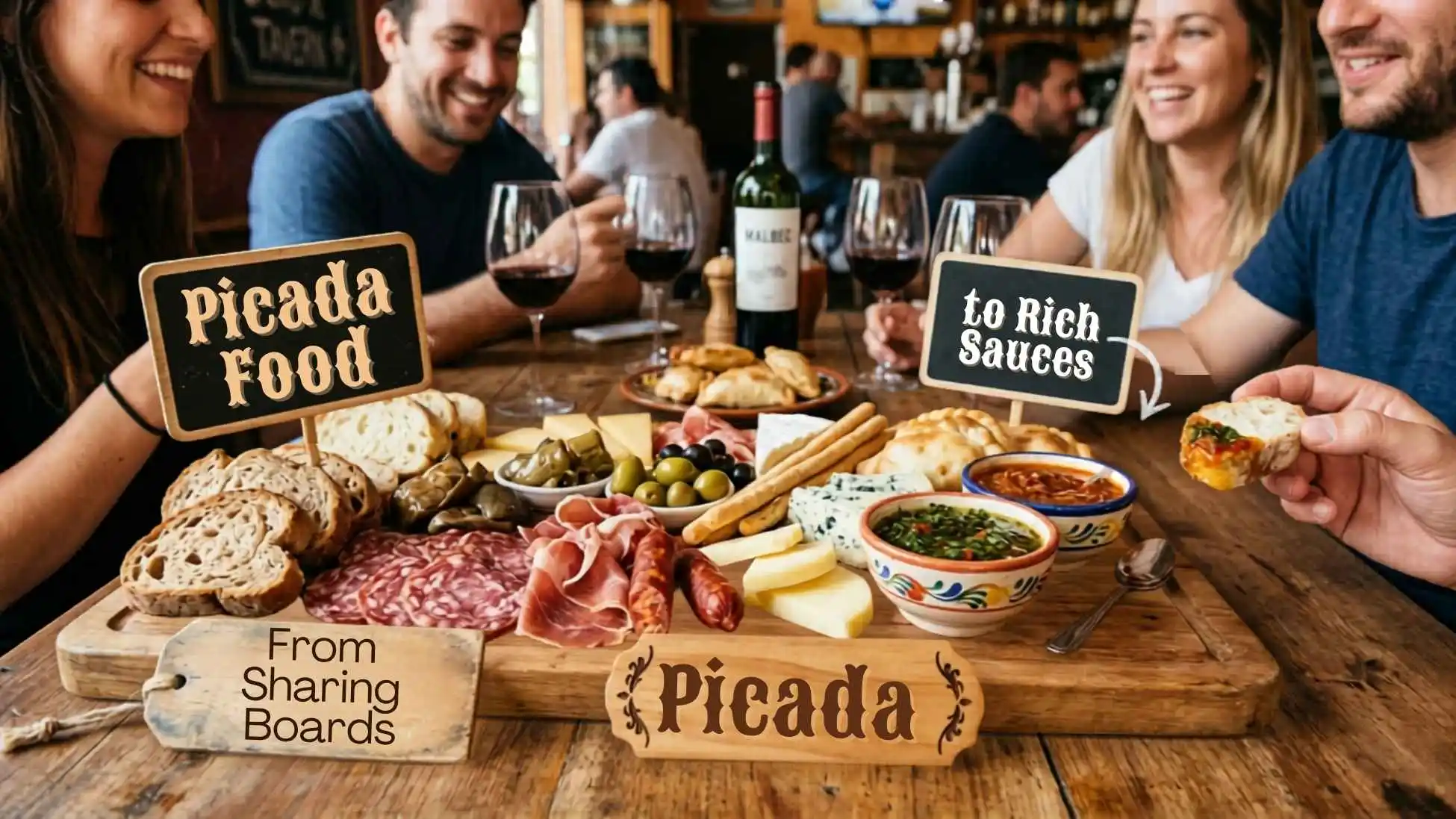
Picada is a versatile culinary concept with two distinct traditions found in different parts of the world. In Argentina and Uruguay, it refers to a shared appetizer platter made with cured meats, cheeses, olives, bread, and other bite-sized foods, enjoyed in social gatherings. In Catalonia, Spain, it is a traditional cooking paste made from toasted nuts, garlic, and bread, used to thicken and enhance stews and sauces. Despite their differences, both forms highlight cultural values of flavor, simplicity, and communal or culinary enrichment.
Table of Contents
The Argentinian & Uruguayan Picada: More Than an Appetizer, a Social Ritual
In Argentina and Uruguay, picada is much more than an appetizer; it is a cultural experience centered on sharing and connection. Served on a communal platter, it features cured meats, cheeses, olives, bread, and pickled vegetables arranged for casual grazing. Often enjoyed before meals or during social gatherings, it encourages conversation and relaxed interaction. Picada reflects the region’s hospitality and love for communal dining, where food is not just eaten but experienced together, strengthening bonds between family and friends in everyday life.
Essential Components of an Authentic South American Picada
- The Cured Meats (Fiambres): The stars are usually Salamín (small dried sausages from towns like Tandil), Jamón Crudo (cured ham), and Lomito (cured pork loin).
- The Cheeses (Quesos): A balance of hard cheeses like Pategrás or Reggianito, and semi-soft varieties like Holanda or Mar del Plata.
- The Briny Elements: Green and black olives (often marinated in chili flakes or oregano) are non-negotiable.
- The Crunch: Roasted peanuts (maní), potato chips, and palitos salados (salty flour sticks).
- The Bread: Fresh, crusty white bread used to move flavors between the palate.
How to Create a Perfect Social Picada at Home
- Tempering the Cheese: Remove cheeses from the fridge 30 minutes before serving. Cold kills the aromatic fats in a good Pategrás.
- The “Dry vs. Wet” Rule: Use small ceramic ramekins for olives and pickles to prevent the brine from making the bread or crackers soggy.
- Portion Geometry: Everything must be “bite-sized.” The user should never need a knife. Cubing the cheese into 1cm squares and slicing the salami at a 45-degree angle for maximum surface area is the professional standard.
Catalan Picada: The Hidden Soul of Mediterranean Stews
In Catalonia, Spain, picada is a traditional culinary paste that forms the secret backbone of many Mediterranean stews and sauces. Prepared by grinding toasted almonds or hazelnuts with garlic, fried bread, olive oil, and sometimes herbs or saffron, it is added during cooking to enrich texture and deepen flavor. Unlike a standalone dish, it works as a finishing element that binds ingredients together naturally. This technique reflects Catalan cooking wisdom, where simple pantry staples are transformed into complex, aromatic layers that elevate everyday meals into rich, hearty, and memorable culinary experiences.
Picada vs. Pesto: Understanding the Key Technical Differences
| Feature | Catalan Picada | Italian Pesto |
| Primary Base | Fried bread & toasted nuts | Fresh basil & pine nuts |
| Fat Source | The nuts themselves | Large amounts of olive oil |
| Function | Thickener/Finishing paste | Raw sauce/Condiment |
| Timing | Added to heat (end of cooking) | Usually served raw or at room temp |
The Golden Trio: Almonds, Garlic & Bread in Picada
While there are hundreds of variations, the “Holy Trinity” of a Catalan Picada consists of:
- Toasted Nuts: Usually almonds or hazelnuts. These provide the fat and the “grit” that thickens the sauce.
- Fried Bread: A slice of stale bread fried in olive oil until golden. This acts as the primary binding agent.
- Raw or Toasted Garlic: Provides the sharp aromatic high notes.
The ingredients are traditionally pounded in a mortar (mortar and pestle). This is crucial because the friction of the pestle releases essential oils that a high-speed blender would simply oxidize.
Regional Variations: Saffron, Chocolate, and Liver Enhancements
For those seeking high-authority culinary knowledge, the Picada often includes “secret” ingredients based on the dish:
- For Seafood (Suquet): Saffron threads and the liver of the fish being cooked are often pounded into the paste.
- For Poultry: Hard-boiled egg yolks are added for a creamy finish.
- For Game Meats: A small piece of high-quality dark chocolate is added to provide a bittersweet depth that balances the gaminess of the meat.
How to Use Catalan Picada to Elevate Your Modern Cooking
You don’t have to be cooking traditional Spanish food to benefit from this technique.
- Modern Soups: Instead of using heavy cream to thicken a vegetable soup, stir in a bit of hazelnuts and fried sourdough. It adds protein and a complex toasted flavor.
- Vegan Cooking: The Picada is a “power move” for vegan chefs, providing the creamy mouthfeel and “umami” typically found in dairy or meat broths.
FAQs
1. Is a Picada the same as a Charcuterie board?
Not exactly. While they share cured meats, it is more casual and focuses on a specific set of South American/Italian-influenced ingredients like Salamín and Maní (peanuts), whereas Charcuterie is a French tradition focused strictly on meat-smithing.
2. Can I make the Catalan Picada in a food processor?
You can, but the texture will be different. The mortar and pestle “crushes” the cell walls of the nuts to release oils, while a processor “cuts” them, often resulting in a drier, less aromatic paste.
What is the best wine to pair with an Argentinian Picada?
A medium-bodied Malbec or a crisp Torrontés is traditional. The acidity helps cut through the fat of the cured meats and cheeses.
Final Thought
Picada stands as a remarkable example of how food traditions travel, adapt, and thrive across cultures. Whether enjoyed as a vibrant shared platter in Argentina and Uruguay or used as a flavorful cooking paste in Catalonia, it reflects creativity and community spirit. Both versions highlight simplicity, resourceful cooking, and the joy of enhancing flavor. Ultimately, it reminds us that food is not only nourishment but also a cultural expression that connects people, preserves heritage, and enriches everyday life meaningfully.


DualMedia Esports: Rising Force in Competitive Gaming

Uncuymaza: Top Private University in Mendoza

OnionPlay Explained: Free Movie Streaming Platform Guide

Swedish Bjudlunch: The Art of Relaxed Hosting

Fanquer Concept: New Era of Fan Engagement Platforms

VHSGJQM Framework for Business Efficiency & Growth

Pravi Celer: Health Benefits, Uses & Nutrition Guide

Enntal Framework: Smarter Living in a Digital World

Cinndymovies Explained: Risks, Legality & Safety Guide

Provascin Review: Heart & Glucose Support Formula

TxMyZone Review 2026: Powerful Networking Redefined

Picada Food: From Sharing Boards to Rich Sauces

Pyjamaspapper: Stylish Comfort Meets Cozy Living Trend

Katy Davis Suffield Profile: Success, Work & Impact

Geekzilla Podcast: Best Hub for Geek Discussions

Calibration Explained: Accurate Measurement Guide

MangaPill Explained: Free Manga Access Pros & Cons

How ins Reflects True Identity and Awareness

Snokido: Free Unblocked Online Games Play Instantly

What Is Milyom? The Emerging Digital Lifestyle & Creative Shift
-

 FRIENDSHIP MESSAGES9 months ago
100+ Heart Touching Sorry Messages for Friends
-

 ANNIVERSARY WISHES1 year ago
100+ Beautiful Engagement Anniversary Wishes Messages and Quotes
-

 BIRTHDAY WISHES1 year ago
300+ Happy Birthday Wishes for Brother | Heart Touching Happy Birthday Brother
-

 FRIENDSHIP MESSAGES10 months ago
80+ Emotional Friendship Messages & Quotes