
BLOG
Calibration Explained: Accurate Measurement Guide

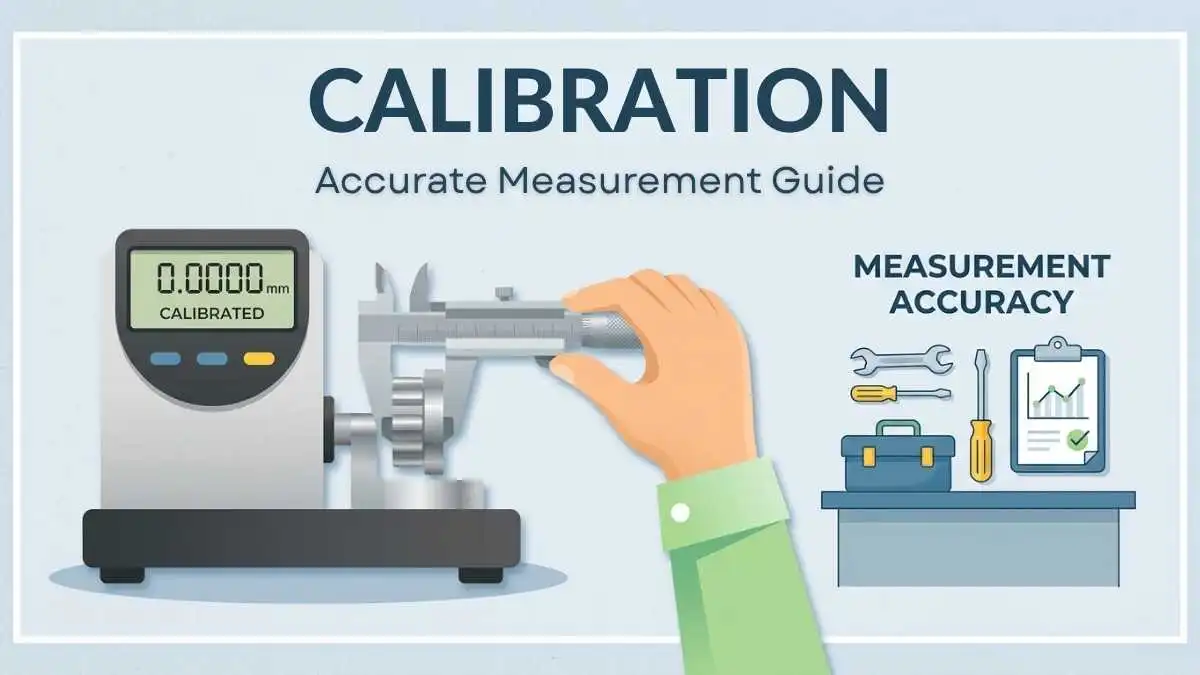
In the modern industrial landscape, precision is not merely a goal. It is a requirement. From the micro-tolerances of semiconductor manufacturing to the life-critical dosages in pharmaceutical production, the reliability of a measurement defines the success of the enterprise. This guide explores the intricate world of calibration, moving beyond basic definitions to examine the technical mechanics, metrological traceability, and the strategic value of maintaining a calibrated ecosystem.
Table of Contents
What is Calibration?
Calibration is the systematic process of configuring and verifying a measuring instrument to ensure its readings match a known and trusted standard. It involves comparing the instrument’s output with a certified reference and making necessary adjustments to achieve accurate results. This process is essential in maintaining precision, reliability, and consistency across measurement systems. it plays a critical role in industries such as manufacturing, healthcare, and environmental monitoring, where even minor measurement errors can significantly impact quality, safety, and decision-making.
The Science Behind Calibration
It is grounded in the principles of metrology, the science of measurement. The process typically involves:
- Reference Standard: A highly accurate and traceable instrument is used as a benchmark. These standards are often maintained by national or international metrology institutions.
- Comparison Process: The device under test (DUT) is compared against the reference standard under controlled conditions.
- Error Identification: Any difference between the instrument’s reading and the standard is recorded as an error.
- Adjustment and Correction: The instrument is adjusted to minimize or eliminate these errors.
This process ensures traceability, meaning that every measurement can be linked back to a universally recognized standard.
Why Calibration Is Critical in Industrial Environments
1. Ensuring Product Quality
In manufacturing, even minor measurement deviations can lead to defective products. For example, in precision engineering, a tolerance error of even a fraction of a millimeter can render components unusable. it ensures that production equipment consistently produces within defined specifications.
2. Enhancing Safety
In sectors like aerospace, healthcare, and energy, incorrect measurements can be catastrophic. For instance, a miscalibrated pressure sensor in a chemical plant can lead to system failures or hazardous leaks. it acts as a safeguard against such risks.
3. Supporting Decision-Making
Organizations rely heavily on accurate data for decision-making. Whether it is temperature, pressure, weight, or electrical measurements, it ensures that the data used in analysis and forecasting is reliable.
4. Compliance with Regulations
Many industries must comply with strict regulatory frameworks. It is often a mandatory requirement for compliance with standards set by regulatory bodies and quality systems like ISO 9001.
Types of Calibration
- Factory: Performed by the manufacturer before the instrument is delivered to ensure baseline accuracy.
- Laboratory: Conducted in controlled lab environments using highly precise reference standards for maximum accuracy.
- Field: Done on-site where the instrument is used, especially when it cannot be easily moved.
- Primary: Uses the highest-level reference standards maintained by national or international metrology institutes.
Accredited vs. Non-Accredited Calibration
| Aspect | Accredited Calibration | Non-Accredited Calibration |
| Certification | Performed by accredited laboratories recognized by official bodies | Performed by internal teams or non-certified service providers |
| Traceability | Fully traceable to national or international standards | May not have formal traceability to recognized standards |
| Accuracy Level | High and verified through strict quality audits | Varies depending on the provider and equipment used |
| Documentation | Provides certified it reports and certificates | May provide basic reports without formal certification |
| Compliance | Meets international standards (ISO, regulatory requirements) | May not meet strict regulatory or industry standards |
Measurement Uncertainty: What the Numbers Actually Tell You
Measurement uncertainty defines the range within which the true value of a measurement is expected to lie. It reflects the limitations of instruments, methods, and environmental factors affecting accuracy. Instead of giving a single exact value, it provides a range of possible values, helping users understand the reliability of the result. In it, accounting for uncertainty is essential because it ensures more realistic and trustworthy measurements. This helps in making informed decisions, improving quality control, and maintaining scientific and industrial precision.
Calibration Intervals: How Often Should You Check?
One of the most common questions in quality management is “How often should I calibrate?” There is no universal answer; instead, organizations must use a Risk-Based Approach:
- Manufacturer Recommendations: A good starting point, but often generic.
- Frequency of Use: A tool used 24/7 wears out faster than one used once a month.
- The “Cost of Failure”: If a measurement error leads to a $100,000 product recall, you should calibrate more frequently.
- Historical Stability: If three consecutive intervals show zero drift, the interval can safely be extended.
The Role of Calibration Across Key Industries
- Healthcare: In hospitals, the use of infusion pumps and ventilators is a matter of life and death. A 5% error in a drug dosage can be fatal.
- Manufacturing: In the automotive sector, parts from different suppliers must fit together perfectly. it ensures that the tolerance of a piston from one factory matches the cylinder from another.
- Environmental Monitoring: Sensors measuring CO2 levels or water purity must be calibrated to provide the reliable data needed for regulatory compliance and climate science.
The Role of Technology in Modern Calibration
Modern IT processes are increasingly supported by advanced technologies:
- Automated it systems reduce human error
- Digital records improve traceability
- Smart sensors self-monitor and alert when recalibration is needed
- Cloud-based systems allow centralized data management
These advancements enhance efficiency while maintaining high accuracy standards.
The Role of Calibration in Quality Management Systems
Calibration is a cornerstone of quality management frameworks such as ISO 9001 and ISO/IEC 17025.
These standards emphasize:
- Documented it procedures
- Traceability to recognized standards
- Regular verification and audits
- Continuous improvement
By integrating it into quality systems, organizations can maintain consistency, reduce variability, and improve operational efficiency.
Common Causes of Measurement Drift
Even well-designed instruments are subject to drift over time. Understanding these causes helps in planning schedules effectively.
- Mechanical Wear and Tear: Frequent use can cause internal components to degrade, affecting accuracy.
- Environmental Factors: Temperature fluctuations, humidity, and vibration can alter instrument performance.
- Electrical Instability: In electronic devices, voltage variations or signal noise can introduce measurement errors.
- Aging Components: Sensors and electronic components naturally degrade over time, leading to gradual inaccuracies.
FAQs
Q1: Can I calibrate my own instruments in-house?
Yes, if you have a controlled environment, trained personnel, and traceable reference standards. However, for ISO compliance, an external accredited lab is often preferred to ensure impartiality.
Q2: What should I do if my instrument fails calibration?
You must perform a “Root Cause Analysis.” Check all products measured by that tool since its last successful calibration to ensure no defective items were shipped.
Q3: Does a new instrument need calibration?
Absolutely. Shipping, handling, and storage conditions can affect a device’s accuracy. Never assume a “factory setting” is still valid once it reaches your facility.
Final Thought
Calibration is more than a technical requirement; it is a continuous commitment to precision, reliability, and trust in every measurement-driven decision. Its impact extends across industries, shaping product quality, operational safety, and regulatory compliance. When organizations prioritize consistent calibration practices, they strengthen their ability to deliver dependable results, reduce risks, and maintain credibility in competitive environments where even the smallest measurement deviation can influence outcomes and long-term success.


DualMedia Esports: Rising Force in Competitive Gaming

Uncuymaza: Top Private University in Mendoza

OnionPlay Explained: Free Movie Streaming Platform Guide

Swedish Bjudlunch: The Art of Relaxed Hosting

Fanquer Concept: New Era of Fan Engagement Platforms

VHSGJQM Framework for Business Efficiency & Growth

Pravi Celer: Health Benefits, Uses & Nutrition Guide

Enntal Framework: Smarter Living in a Digital World

Cinndymovies Explained: Risks, Legality & Safety Guide

Provascin Review: Heart & Glucose Support Formula

TxMyZone Review 2026: Powerful Networking Redefined

Picada Food: From Sharing Boards to Rich Sauces

Pyjamaspapper: Stylish Comfort Meets Cozy Living Trend

Katy Davis Suffield Profile: Success, Work & Impact

Geekzilla Podcast: Best Hub for Geek Discussions

Calibration Explained: Accurate Measurement Guide

MangaPill Explained: Free Manga Access Pros & Cons

How ins Reflects True Identity and Awareness

Snokido: Free Unblocked Online Games Play Instantly

What Is Milyom? The Emerging Digital Lifestyle & Creative Shift
-

 FRIENDSHIP MESSAGES9 months ago
100+ Heart Touching Sorry Messages for Friends
-

 ANNIVERSARY WISHES1 year ago
100+ Beautiful Engagement Anniversary Wishes Messages and Quotes
-

 BIRTHDAY WISHES1 year ago
300+ Happy Birthday Wishes for Brother | Heart Touching Happy Birthday Brother
-

 FRIENDSHIP MESSAGES10 months ago
80+ Emotional Friendship Messages & Quotes