
BLOG
Nahttypen: Seam Types in Sewing and Surgical Suturing

Nahttypen is the German term for types of seams, a concept applied in both textile craftsmanship and medical suturing. In sewing, seams are structural or decorative joins between fabric pieces. In surgical practice, “seams” refer to stitches that unite tissue, crucial for wound stability and healing. Whether shaped in a fashion studio or performed in an operating room, both share the principle of joining materials with precision, skill, and purpose.
From the rugged reliability of a flat-felled seam to the refined elegance of a French seam, seam choice depends on fabric type, purpose, and desired finish. In suturing, methods such as continuous or interrupted stitches are selected based on wound location, tension needs, and recovery goals. For professionals in both fields, understanding seam types and applying them correctly is essential for function, durability, and safety.
Table of Contents
Seam Selection and Its Importance
A seam is far more than a stitched line it is the structural backbone of any garment or wound closure. In sewing, it influences strength, appearance, and comfort; in medicine, it impacts healing quality and risk prevention.
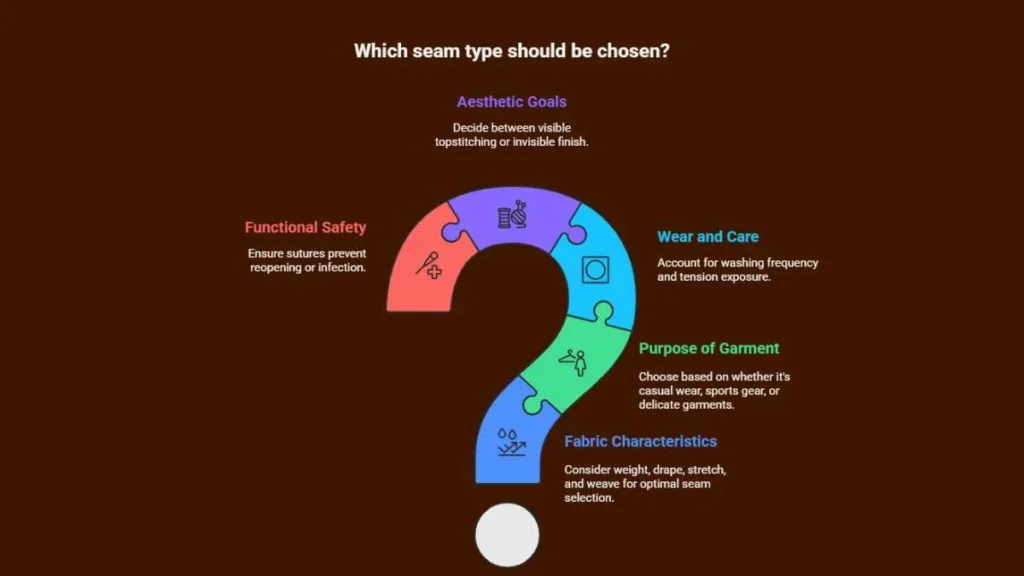
Choosing the right seam depends on:
- Fabric characteristics: weight, drape, stretch, weave.
- Purpose: casual wear, sports gear, industrial textiles, or delicate garments.
- Wear and care: washing frequency, tension exposure.
- Aesthetic goals: visible topstitching or invisible finish.
- Functional safety: in sutures, preventing reopening or infection.
Poor seam choice can cause puckering, bulk, fraying, breakage, or compromised wound integrity.
Everyday and Decorative Seam Types in Sewing
1. Plain Seam
Simple and versatile; joins fabric right sides together. Common in everyday garments and lightweight fabrics. Needs edge finishing to avoid fraying.
2. Flat-Felled Seam
Strong, enclosed, and ideal for denim, uniforms, and workwear. Lies flat, resists fraying, but takes more time to sew.
3. French Seam
Encloses raw edges for a refined finish; perfect for silk, chiffon, and sheer fabrics. Adds elegance but can create bulk in heavy fabrics.
4. Lapped Seam
One piece overlaps another and is topstitched; decorative and strong, often seen in leather goods or as a visible design detail.
5. Bound Seam
Raw edges enclosed in bias tape or binding; neat, professional finish for unlined garments. Adds slight bulk but prevents fraying entirely.
6. Overlocked Seam
Uses a serger to stitch, trim, and finish in one pass. Best for knits and stretch fabrics, adding flexibility and preventing unraveling.
7. Double-Stitched Seam
Reinforced with two parallel stitch lines; common in activewear and high-stress points for added durability.
Industrial and Technical Seam Variations
Modern industries engineer seams for performance, comfort, and efficiency:
- Bonded Seams: Joined with adhesives or heat for waterproof outerwear.
- Seam Taping: Applied over stitched joins to prevent water penetration.
- Coverstitch Seams: Provide stretch and a professional hem finish in sportswear.
- Reinforced Seams: Multiple stitch lines add strength for heavy-duty workwear.
These specialized methods balance functionality, appearance, and longevity to meet demanding consumer expectations.
Surgical Sutures: Seams in Medicine
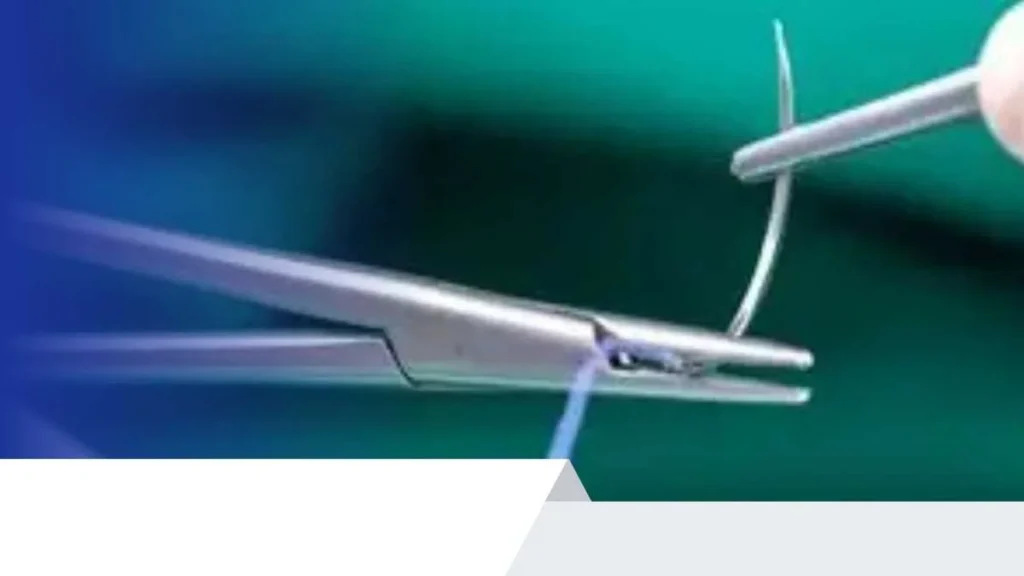
In healthcare, Nahttypen applies to suture techniques that restore tissue after injury or surgery. Precision is critical, as outcomes affect recovery and patient safety.
Common suture types include:
- Interrupted: Separate stitches; precise tension; secure if one fails.
- Continuous: One long stitch; quick; even tension.
- Subcuticular: Under-skin; hidden finish; minimal scarring.
- Mattress: Distributes tension; strong for high-stress closures.
- Purse-String: Circular closure; used for openings.
- Figure-of-Eight: Cross-pattern for added strength.
- Running Locking: Continuous with locks for extra hold.
- Absorbable: Dissolve naturally; ideal for internal healing.
- Non-Absorbable: Remain until removed; for long-term support.
- Barbed: Hold without knots; faster closure.
Comparing Fabric Seams and Surgical Stitches
| Aspect | Textile Sewing | Surgical Suturing |
| Material Joined | Fabric pieces | Biological tissue |
| Purpose | Durability, aesthetics, shaping | Wound closure, healing |
| Tool | Sewing machine, needle & thread | Surgical needle & suture |
| Selection Factors | Fabric type, garment use | Tissue type, healing needs |
| Quality Indicators | No puckering, strong hold | Minimal scarring, secure healing |
Skill and Precision Across Professions
Both seamstresses and surgeons refine their technique through training, practice, and material knowledge. Whether working with satin or surgical tissue, the essentials remain:
- Careful adaptation to material properties.
- Consistent precision in execution.
- Continual skill updates to match modern standards.
Modern Innovations in Seam and Suture Technology
In Textiles:
In textiles, innovations like laser bonding, stretchable finishes, and eco-friendly threads enhance comfort, flexibility, and sustainability.
In Medicine:
In medicine, absorbable sutures, tissue adhesives, surgical staples, and antimicrobial coatings improve healing speed, safety, and efficiency.
Quick FAQs
Q1: What is the difference between a seam and a hem?
A seam joins fabric pieces; a hem finishes the edge of a single piece.
Q2: Can all sewing seams be made on a serger?
No, some decorative or enclosed seams require a standard sewing machine.
Q3: Do barbed sutures need knot tying?
No—they grip tissue without knots, saving time in surgery.
Conclusion: Why Seam Knowledge Matters
The idea of Nahttypen connects artistry and precision. In textiles, seams shape garments, blending strength with beauty; in surgery, they restore form and function. From a plain seam in a cotton shirt to a subcuticular stitch in reconstructive surgery, each join tells a story of connection, purpose, and craft. Mastery in choosing and executing seam types, whether in fabric or tissue is not just technical skill, but respect for the integrity of what is being joined.


Snokido: Free Unblocked Online Games Play Instantly

What Is Milyom? The Emerging Digital Lifestyle & Creative Shift

NTDTVJP: Authentic Japanese News & Culture Online

GifHQ: Find, Share & Download Animated GIFs Easily

Cesta Roman: Ancient Roman Roads and Lasting Influence

Logisths: Intelligent Supply Chain Management

CDiphone Smartphone: AI, Modular Design & Creative Power

Discover Pizokeelio: Modern Digital Naming Trends

Discover Yalla Choy: Tea, Tradition & Togetherness

Epcylon Technologies Inc: Real-Time FinTech Trading Solutions

Onnilaina Online Loans: Fast, Secure & User-Friendly

Pasonet: Fast & Secure Digital Payment Gateway Solution

Musté: Embrace Pure, Authentic, and Untouched Originality

Shani Levni: Innovative Art and Storytelling Vision

Lifestyle & Fashion Trends: Express Your True Identity

Instablu: Authentic Visual Storytelling Social Platform

Discover Kibard: Versatile Keyboards for Work & Play

Scrolller: Smooth Infinite Scrolling for Reddit Media

Thank You Coach Messages & Cards

TransDS Explained: Dynamic Data Integration Tool
-

 FRIENDSHIP MESSAGES5 months ago
100+ Heart Touching Sorry Messages for Friends
-

 ANNIVERSARY WISHES9 months ago
100+ Beautiful Engagement Anniversary Wishes Messages and Quotes
-

 BIRTHDAY WISHES8 months ago
300+ Happy Birthday Wishes for Brother | Heart Touching Happy Birthday Brother
-

 BIRTHDAY WISHES9 months ago
200+ Unique Birthday Wishes for Your Best Friend to Impress on Their Big Day